Overview
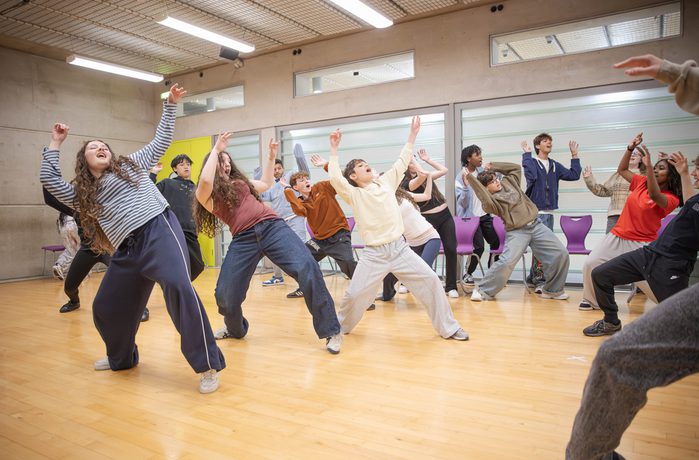
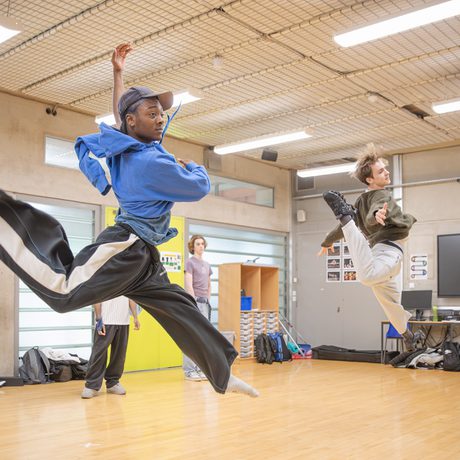
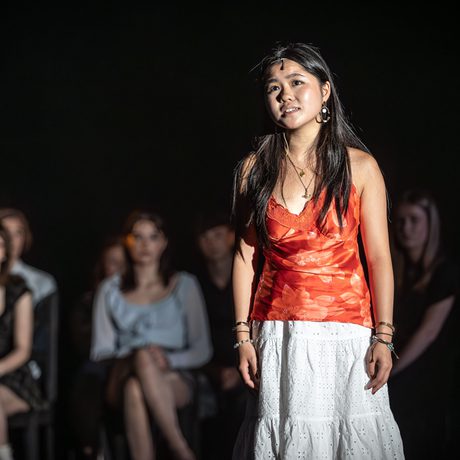
Junior Academy Musical Theatre helps young performers from ages 13 to 18 to develop their skills, confidence and passion for acting, singing and performing.
After an outstanding end-of-year showcase, Junior Academy Musical Theatre is now in its fourth year.
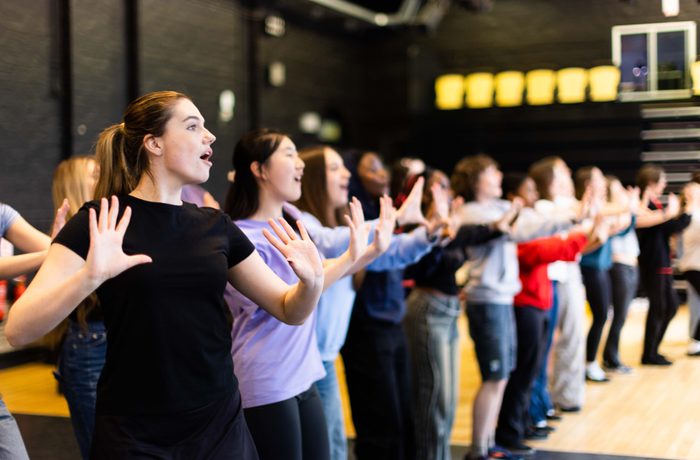
Each Saturday, students work on acting, voice, singing, musical theatre repertoire and movement, with projects and masterclasses being led by top industry professionals. West End veteran Grainne Renihan is Course Leader, and Deborah Stinton, an established actor-musician, dancer and equality and inclusion advocate, is Deputy Leader.
At Junior Academy Musical Theatre, individuality will be nurtured, diversity embraced, and students empowered to be creative and brave. With opportunities to perform throughout the year, you will learn by doing. Our aim is to create young musical theatre artists who have the necessary skills to go on to further specialist training in musical theatre.
Image gallery

Classes and Activities
Ensemble Singing
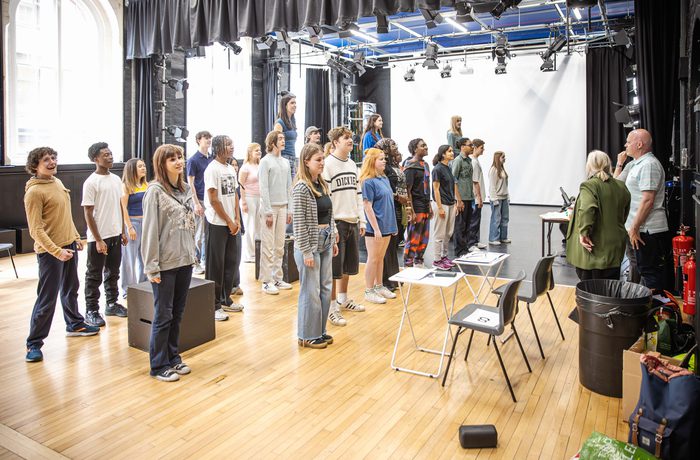
You will work with our Musical Directors each week exploring a variety of musical theatre ensemble repertoire and learning how to blend, harmonise and follow a conductor.
Repertoire
You will work with our musical directors and course leaders. This class will concentrate on solos and small ensembles from a wide range of musical theatre rep that is both age and range appropriate. It is an opportunity to receive individual contact and feedback in preparation for singing panels and auditions.
Drama
These classes will explore the basics of various acting techniques and improvisation, and how to approach texts for both song and spoken word, from classic to modern.
Movement
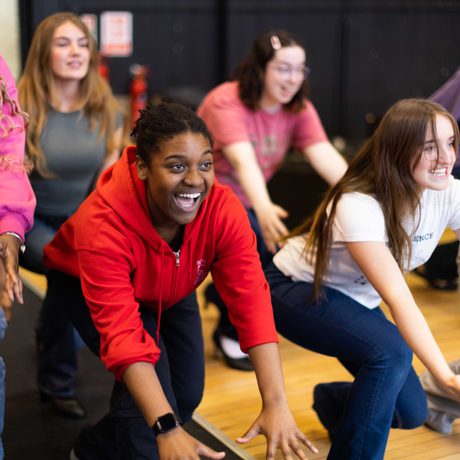
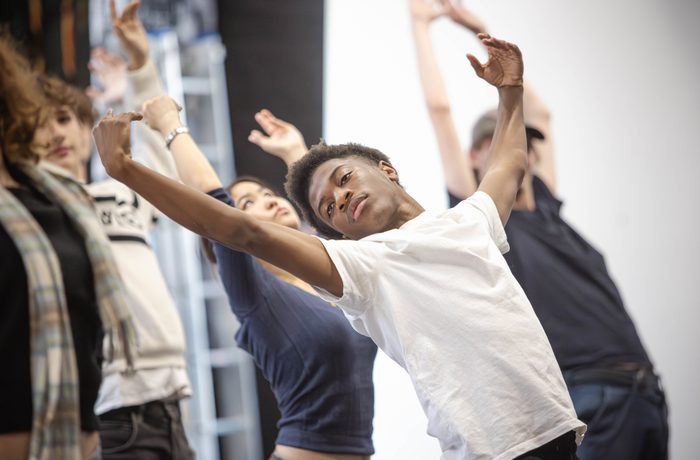
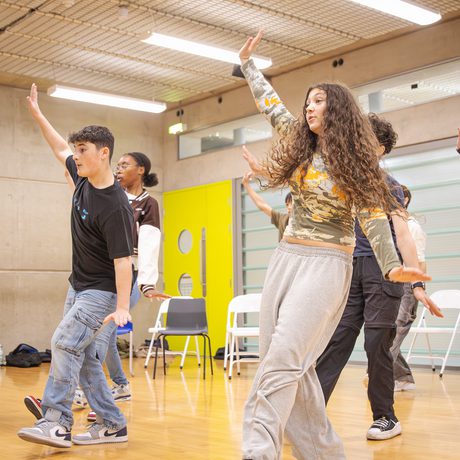
Movement work is designed to build confidence and cultivate a sense of physicality. You will learn how to warm up for theatre safely, and explore the basics of musical theatre movement. We invite guest choreographers from across the industry to stage and run workshops for chosen ensemble pieces.
Visiting industry professionals
A variety of industry specialists work with the students in both individual panels and choreographic workshops throughout the year.
Productions
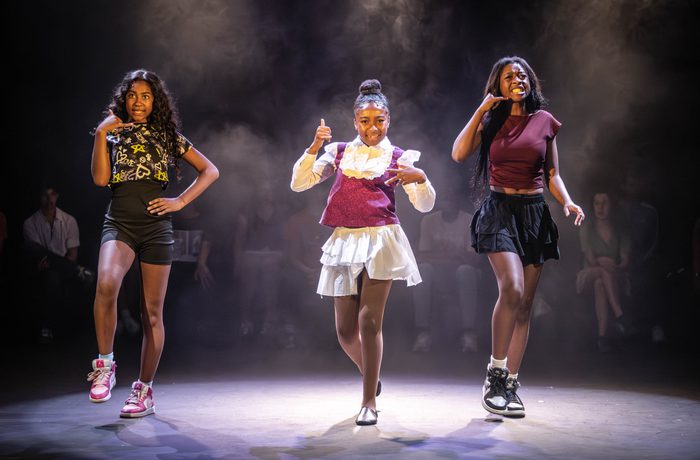
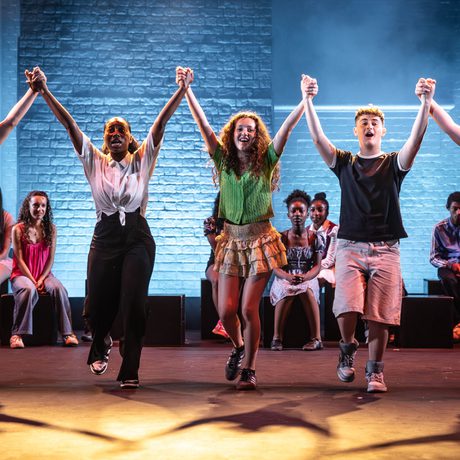
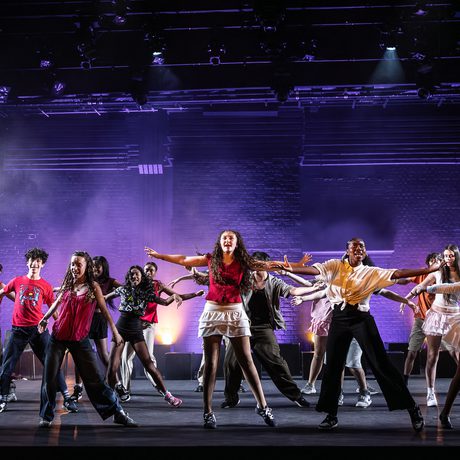
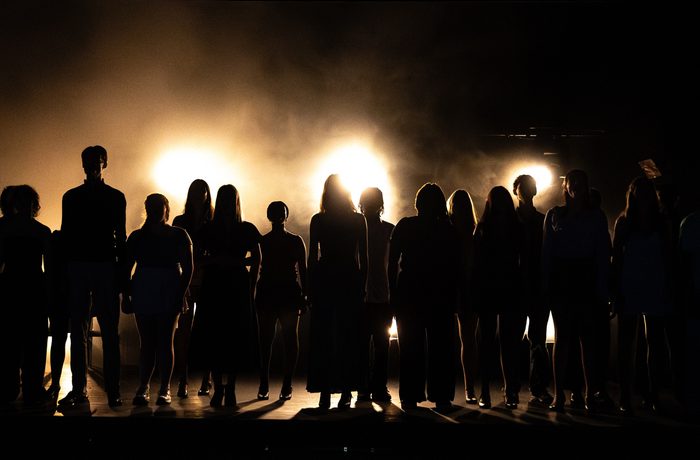
Summer term lengthened rehearsals lead to an end of year fully staged showcase, with professional lighting, sound team, and live musicians in the Royal Academy of Music’s Susie Sainsbury Theatre. This performance is open to an invited audience of family, friends and industry.
Image gallery

Entry requirements
Students aged 13 and over are admitted to Junior Academy Musical Theatre, and remain until they are 18, subject to progression and commitment. Students will be divided into two companies according to age and experience.
Applicants must be no older than 18 years old by 31 August 2026.
Auditions
Auditions for entry will be a two-part process, with a video submission followed by a live recall for selected applicants.
The applications portal for taped auditions will open in early January 2027 for the September 2027 intake. It will close early March 2027.
Candidates who are shortlisted will be invited to join us at the Academy for a live audition in mid-March 2027.
Video Submission
All Junior Academy first round auditions are administered via Acceptd video. Acceptd is an online platform where you upload audition materials and complete additional requirements.
For assistance on setting up an Acceptd account, see our Junior Academy Candidate Guide to Acceptd.
Please provide:
- Two contrasting songs, preferably with one song from the musical theatre repertoire. Singing to live accompaniment or backing tracks is preferred, but unaccompanied (a cappella) submissions are also allowed. You will not be penalised if you sing unaccompanied.
- A piece of text under one minute, preferably memorised, which could be a monologue, poem or paragraph from a story.
- A short explanation to camera of why you’d like to join Junior Academy Musical Theatre. We want to see your personality, so please keep this spontaneous and unscripted.
- A headshot photograph (head and shoulders). A photo taken on a phone is acceptable.
Accessibility
We recognise that recording an audition at home may present practical challenges.
If any of the guidance on this page is difficult for you to meet due to disability, health, caring responsibilities or access to equipment, we can make adjustments.
This may include:
- alternative formats for the spoken introduction
- flexibility around recording conditions or setup
- support with submission requirements
If speaking in English presents a barrier, please contact us to discuss how we can assist.
General recording advice
- provide your video content in a horizontal format (not vertical)
- recordings may be continuous or separate, depending on the course
- accompaniment should be included where required (this can be a ‘minus-one’ track if you are unable to get an accompanist)
The panel is assessing your performance, not the production quality of your recording.
Recording your audition: what matters most
Essential
- Clear audio (this is the priority)
- Accurate representation of your performance
Helpful (but optional)
- Good lighting (natural or artificial)
- A simple, uncluttered background
- A stable camera position
If you cannot meet all of these conditions, submit the best recording you can. This will not negatively affect how your performance is assessed.
Submitting your recordings
Upload your files
- Upload video files directly to Acceptd
- We do not accept links to YouTube, Dropbox or other platforms
- MP4 is recommended for smaller file sizes
Before you submit
- Check your course’s audition requirements
- Make sure you have uploaded all required materials
- Preview your application carefully
- Only press ‘Submit’ once everything is complete
After uploading
When your files show as ‘processing’, they have been successfully uploaded. You can leave the page at this point.
Live Auditions
Live auditions will consist of meeting our course leaders and performing their chosen audition song.
Where possible, the applicant should bring sheet music for our pianist to play from. If this is not possible, they should have a downloaded copy of their backing track available on a Bluetooth-enabled device, or send it ahead to jamt@ram.ac.uk
JAMT Mentorship Programme
The JAMT Mentorship Programme is a one-year course held once a month on Saturday mornings during term time.
It is designed for a limited number of talented young people who are either slightly younger or are aged 13 with less stage experience.
What you will study: The curriculum focuses on age-appropriate solo musical theatre repertoire, ensemble singing, and drama.
- Who you will work with: Training is delivered by West End musical directors, the JAMT teaching team, course leaders, and specialist alumni from the Academy’s MA Musical Theatre programme.
- Fees: This course is fully funded by the Royal Academy of Music’s Widening Participation department; there are no tuition fees.
- How to apply: Entry is via invitation only to a Discovery Event Workshop through our Widening Participation activities.
- Individual applications are not accepted.
Wellbeing
We believe that students thrive when their wellbeing is prioritized, which is why all of our Junior Academy programmes integrate techniques for managing anxiety, enhancing practice routines and improving memory.
More performance, less assessment
Through focusing on individual and group performance, we create a nurturing environment where you can grow without the pressure of constant evaluation.
'Confident young musician' programme
Junior Academy Musical Theatre Students have access to the Confident Young Musician Programme.
This programme, designed for 12-18-year-olds, is built around fostering both musical ability and mental wellbeing. It provides essential tools to manage the demands of being a musician, including workshops on the Alexander Technique.
Independence and teamwork
We encourage you to think independently, solve problems on your own, and take ownership of your personal growth. We also place a strong emphasis on teamwork, teaching you the value of cooperation, understanding and tolerance. Our supportive and approachable staff are always on hand to guide you, preparing you for your musical journey and for life in general.
Community and belonging
In September the first week of term includes a welcome from the Director of Junior Academy and an opportunity to meet the other Junior Academy students. You then meet your teachers, course leaders and fellow company members and have a fun and extended first day of rehearsals. This event helps build a sense of community where everyone feels valued and connected and no student is left feeling isolated.
Term Dates 2026/27
Autumn 2026
Saturday 12 September - Saturday 5 December (11 weeks)
Half term: Saturday 24 October & Saturday 31 October
Intensive Day: Saturday 12 September
This includes all Junior Academy, Primary Academy and Junior Jazz students.
Spring 2027
Saturday 9 January to Saturday 20 March (10 weeks)
Half term: Saturday 13 February
Summer 2027
Saturday 17 April - Saturday 10 July and Sunday 11 July (12 weeks)
Half term: Saturday 29 May & Saturday 5 June

With Thanks To
Junior Academy is very grateful to donors and benefactors whose assistance has greatly facilitated the implementation of our plans. Alongside various anonymous benefactors, these include:
- The Leverhulme Trust
- The Wolfson Foundation
- Musicians Benevolent Fund
- Susan Lawrence Travel Bursary Fund
- Julian Bream Trust Scholarships
- Benslow Musical Instrument Loan Scheme
- Department of Education Music and Dance Scheme (MDS)
- ABRSM
Junior Academy is supported by the Music and Dance Scheme Access to Excellence programme. The aim of the scheme is ‘to help identify, and assist, children with exceptional potential, regardless of their personal circumstances, to benefit from world-class specialist training as part of a broad and balanced education, which will enable them, if they choose, to proceed towards self-sustaining careers in music and dance’.
Junior Academy Musical Theatre is supported by the Signatur Programme and The Mila Charitable Organisation.
Signatur is the umbrella name for The Karlsson Játiva Charitable Foundation’s work for the advancement of the art of music.