Collections Index
Since its foundation in 1822, the Academy has acquired and created important collections of instruments, artworks, memorabilia, manuscripts, letters, scores, performance materials and other objects.
Browse the historical instruments, original manuscripts, and rare artifacts that continue to shape the Academy's living legacy.
Composers
Explore our comprehensive collection showcasing the rich history and iconic artifacts belonging to the figures who have shaped the world of classical music.
Priaulx Rainier archive
The papers of composer Priaulx Rainier (1903-1986) are dominated by family, professional and personal letters received. They include two extensive runs of letters from artist Barbara Hepworth and composer Michael Tippett, both of whom were close friends. In addition, there are smaller runs of letters from many other figures in the arts. Apart from a series of letters written by Priaulx Rainier to her sister, Nella, in South Africa, which were brought to England when her sister came to live in London, there are no letters or copies of letters written by Rainier herself (aside from an occasional draft written for professional purposes).
All Rainier’s musical scores are housed at the University of Cape Town, with the exception of Quanta and Due canti e finale (both of which were bequeathed to the British Library) and Triptych for Oboe Solo, MS 526, in the Academy Library.
The catalogue for this collection can be found in The National Archives.
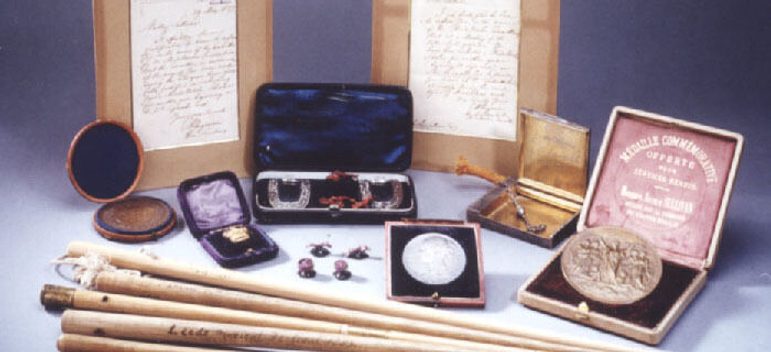
Sir Arthur Sullivan Collection
Sir Arthur Sullivan (1842-1900) studied at the Royal Academy of Music, learning piano with William Sterndale Bennett and composition with John Goss. Felix Mendelssohn, a friend of Her Majesty Queen Victoria and His Royal Highness Prince Albert, offered support and encouragement to the Academy in its earliest days, and in 1856 Sullivan became the first winner of the Mendelssohn Scholarship, which was extended for two further years, the final of which was spent in Leipzig.
Sullivan became famous in particular for his partnership with WS Gilbert. Their Savoy Operas included The Mikado, HMS Pinafore and The Pirates of Penzance. Sullivan bequeathed the original autograph full scores of The Mikado and The Martyr of Antioch to the Academy. The Library also houses the Sullivan Archive, prepared by the composer’s most recent biographer, the late Arthur Jacobs, who also taught at the Academy. It contains microfilm copies of the 20 volumes of the composer’s diaries (the original copies are held at Yale University), conference papers, a personalia database and other material.
Held within our collections are photographs, prints, postcards, Sullivan’s cottage piano and personal items such as medals, smoking and writing accessories. There are also some digitised pages from The Mikado.
Conductors
Explore larger named collections relating to famous conductors with strong Academy associations.
Sir John and Lady Evelyn Barbirolli Collections
Established by Lady Barbirolli in memory of her husband conductor Sir John Barbirolli FRAM (1899-1970). A prize-winning 'cello student at the Royal Academy of Music, Barbirolli’s early career extended from playing as soloist in Elgar's 'Cello Concerto in 1921 to performing in dance halls, cinemas and circuses. As he himself said, ‘everywhere except the street’. From 1924 he concentrated on conducting, establishing in particular a reputation as an interpreter of opera. He was invited to succeed Toscanini as the permanent conductor of the New York Philharmonic Orchestra in 1936 and in 1943 he returned to England when he was appointed conductor of the Hallé Orchestra, becoming its Conductor-in-Chief in 1958. During this time he worked regularly with the Houston Symphony and the Berlin Philharmonic Orchestras, in particular. In 1961 Barbirolli assumed responsibility for the Academy’s first orchestra, with the regular assistance of Maurice Handford.
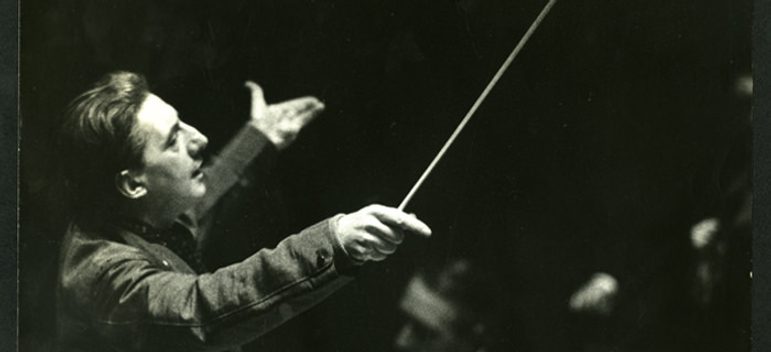
John Barbirolli.
Today's student conductors are taught in the Barbirolli Room, in which part of the collection is displayed. The Sir John Barbirolli archive was acquired from Lady Evelyn Barbirolli and consists of photographs, concert programmes, paintings, sculpture, memorabilia and press cuttings, all of which can be found on the Apollo catalogue. Scrapbooks from around 1912 containing reviews, advertisements for performances, and further biographical items enrich this collection and further its research potential. A catalogue of other materials such as personal papers, diaries and correspondence is in preparation and will be made available via the Academy website in due course; in the meantime, access to these materials is available on application to the Library.
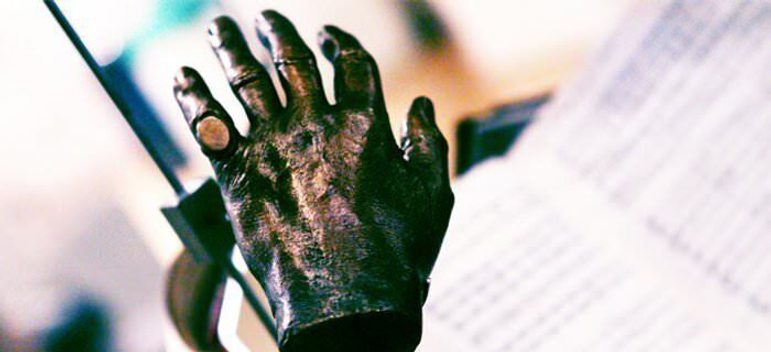
Otto Klemperer Collection
Otto Klemperer HonRAM (1885-1973) was one of the leading conductors of the 20th-century and a distinguished authority on the Austro-German repertoire. The conductor’s daughter, the late Lotte Klemperer, presented the Klemperer Collection to the Academy in 1973.The gift includes a portrait, batons, books, and scores with Klemperer’s own markings.The bust of Klemperer was presented by Jonathan Allsop and Adam Kurakin in 1996.
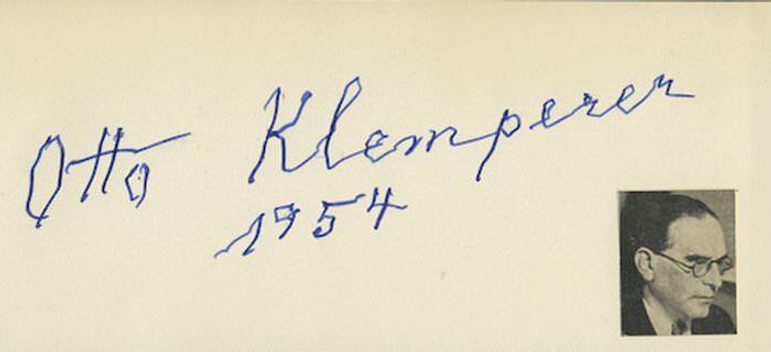
Otto Klemperer's portrait and signature.
Sir Charles Mackerras Collection
The Royal Academy of Music collections offer scholars and performers an exciting opportunity to engage with some of the great figures of our musical past. An example of this is the collection of Sir Charles Mackerras. This is an outstanding research resource for those interested in performance history. The marked scores and orchestral parts contained in the collection are a valuable guide to music making throughout the late twentieth and early twenty-first centuries. To access this collection please contact the Library.
See also: The Sir Charles Mackerras Website
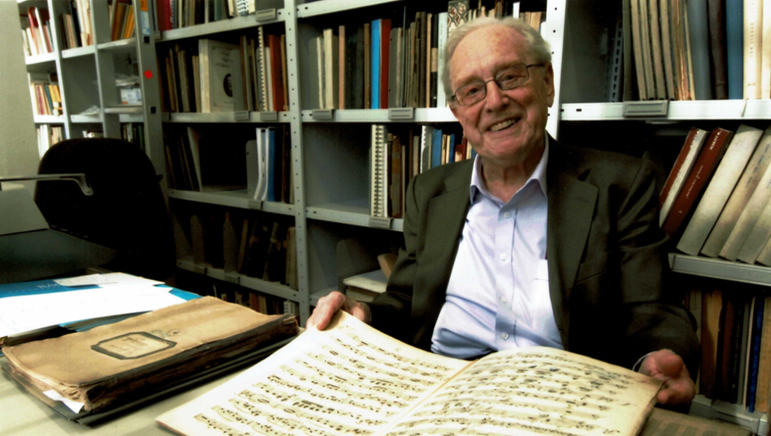
Sir Charles Mackerras.
Sir Henry Wood Collection
Sir Henry Wood FRAM (1869-1944) studied composition at the Academy from 1886 with Ebenezer Prout and voice with the great pedagogue Manuel Garcia. He became established as a conductor in the 1890s and throughout his career showed a particular concern to introduce contemporary music into his programmes. He conducted the British premières of music by such composers as Debussy, Ravel, Schönberg, Shostakovich and Sibelius as well as advocating the work of English composers, including Bax and Britten. He taught at the Academy from 1923.
Held within our collections are the famous bust by Donald Gilbert which is displayed each year near the organ at the Royal Albert Hall during the BBC Proms season; photographs, caricatures, many of his own paintings in oils, some musical instruments, batons, tuning devices, his book-press and a conducting chair; and digitised pages of, for instance, his ‘Fantasia on British Sea Songs’.
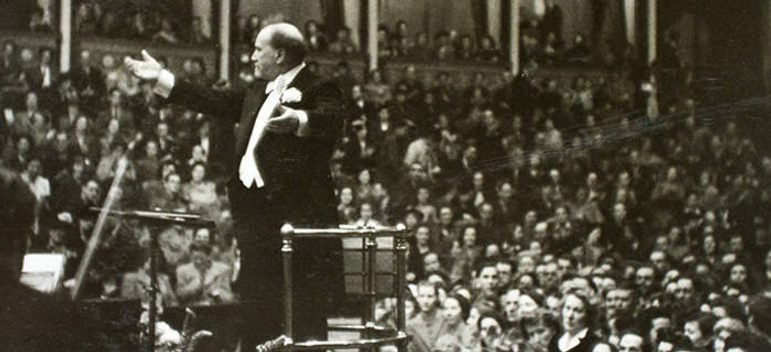
Sir Henry Wood.
Graphic Art
The Academy’s collections include portraits, drawings, etchings, watercolours, prints and photographs
These hang in the teaching rooms, concert spaces and corridors of the main Academy building, and provide an inspiring backdrop for study and performance.
Much of our collection can also be seen on Art UK.
Image gallery
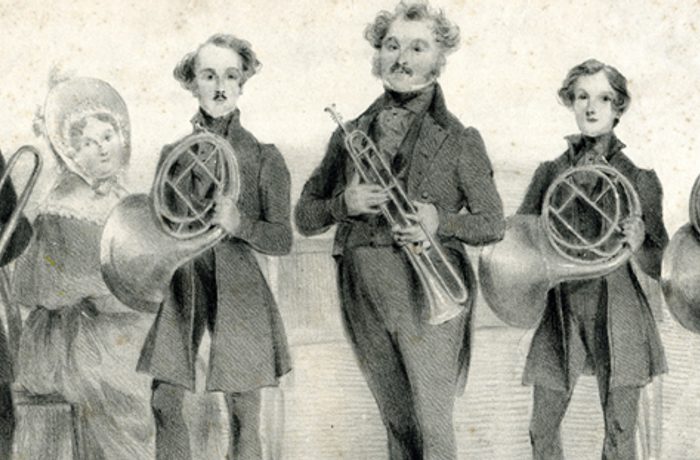
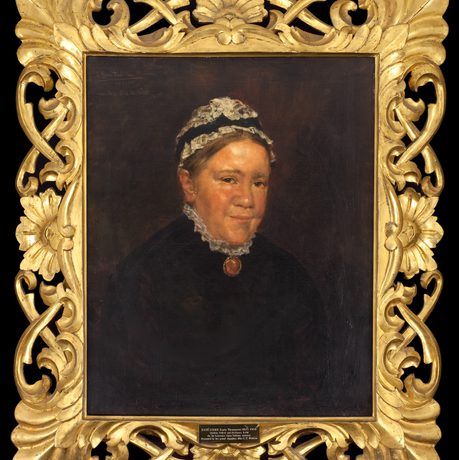
Harriet Cohen Collection
Harriet Cohen CBE FRAM (1895-1967) studied at the Royal Academy of Music. Noted for her performances of Bach and modern English music, she was an advocate of the works of Arnold Bax and in 1933 also premiered Vaughan Williams's Piano Concerto, which was dedicated to her. She injured her right hand in 1948 and played one-handed until her retirement in 1960. Her memoirs, A Bundle of Time, were published just prior to her death. Harriet Cohen bequeathed a large collection of paintings, some photographs and her gold bracelet to the Academy, with a request that the room in which the paintings were to be housed be named the Arnold Bax Room. The collection comprises works by British and French artists of the late-19th to mid-20th century, including paintings by William Scott, Marc Chagall, Marie Laurencin, Edward Wolfe, Duncan Grant and Josef Hermann.
Granville Collection
Bequeathed by the collector Philip Granville, this collection comprises 168 items of graphic art from 20 countries, representing the work of some of the world’s finest artists working in this medium. The mural-like series ‘War Orchestra’ (six sheets) by the Croatian artist Boris Bucan is perhaps the highlight of the collection, while work by the German artist Gerhard Voigt uses a repeated image of a music stand, expressing the use of music itself, here using the idea of rhythm as a design. Two large posters by the advertising company Bartle Bogle Hegarty (1992) graphically illustrate early images for the new Sony Walkman. Many were on display in an exhibition at the Royal College of Art in 1993.
Priscilla Naish Collection
This collection comprises 19 drawings of musicians drawn from life by the artist Juliet Pannett, along with two unused tickets for the opening concert of the Queen Elizabeth Hall on London’s South Bank. The sitters include Ralph Vaughan Williams, Clifford Curzon, Jack Brymer, William Walton and Denis Matthews. Priscilla Naish studied at the Royal Academy of Music, and the collection was donated in late 2010.
Marjorie Waterman Collection
This collection of 54 engravings, lithographs and mezzotint portraits of musicians was presented by Beryl Clarke in 2007, and was supplemented by further items in 2009. Highlights include portraits of the musician and inventor Charles Claggett and composer and guitarist Francesco Corbetta, and a lithographic portrait of composer Claude Joseph Rouget de Lisle, along with verses from 'La Marseillaise', which he wrote in 1792.
Instruments
Since its foundation in 1822, the Academy has acquired or been lent important collections of musical instruments
Becket Collection
The Becket Collection was started by Elise Becket Smith (now Lady Smith) in 1998 to encourage and facilitate the study of historically informed performance. For the next decade - and beyond - the Collection was built, under the direction of the Royal Academy of Music’s Curator of Instruments, the luthier David Rattray. It now comprises a complete orchestra of 25 Classical period British stringed instruments together with a full set of woodwind, brass and percussion instruments. Lady Smith, together with her fellow Trustees of the Becket Collection, donated this entire unique and important working collection of period instruments to the Academy in 2012.
The stringed instruments include a Daniel Parker violin (1720), a Nathaniel Cross cello (c.1740), a Henry Jay viola (1768) and the only known example of an English piccolo violin, by John Barratt (c.1725). The earliest instrument in the Becket Collection is a Robert Cuthbert violin of 1676.
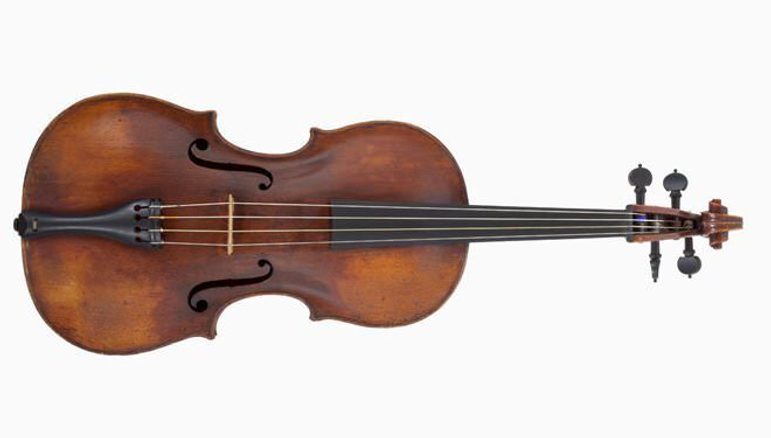
Apart from the fine level of craftsmanship seen in these instruments, the fact that many remain in unaltered period condition makes this collection both unique and of highly important scholarly significance. The Becket Collection also incorporates a group of 15 specially commissioned modern copies of Venetian baroque masterpieces and their bows — an ensemble of the type that Vivaldi would have used for performances in Venice in the early 18th century. Three years in the making, this was the largest single instrument commission of its time and involved some of the finest luthiers from Europe and the USA.
Distinguished musicians who have worked with the Collection include Margaret Faultless, Jonathan Cohen, Sir Roger Norrington, Pavlo Beznosiuk, Trevor Pinnock CBE and Laurence Cummings. Many of the students who have used the instruments during their studies are now playing with the leading period orchestras in England and abroad. In 2010 the Royal Academy of Music published the much-praised book The Becket Collection of Historical Musical Instruments, by David Rattray, to mark the 10th anniversary of the foundation of the Collection.
Broadwood Collection
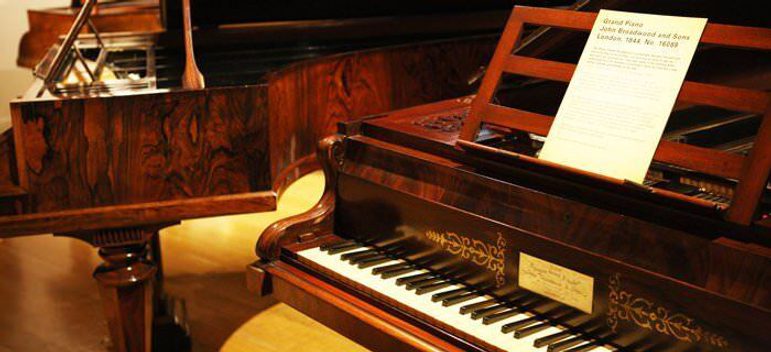
The Broadwood Trust, through its Chairman, the late Mr Adam Johnstone OBE, donated the Broadwood Collection of historical keyboard instruments to the Academy in 1993; these had been preserved by the Broadwood family as important specimens of the firm’s production. Four of the instruments are on long-term loan to the Cobbe Foundation and are kept at Hatchlands Park, a National Trust property.
Calleva Collection
The Calleva Foundation has been creating this fine instrument collection since 2010. The Calleva Collection is embracing the challenge to assemble instruments from the highest calibre of international makers to create a pool of early 21st century instruments that are the best available in the world. Primarily consisting of stringed instruments, the collection also includes a significant collection of bows.
The Calleva Foundation's project has two main objectives. One is to build a legacy for many future generations of talented young musicians as a form of bursary via the loan of an instrument that they would not otherwise have access to during their formative years. The second one is to encourage the making and appreciation of the finest new instruments both in the modern and baroque traditions.
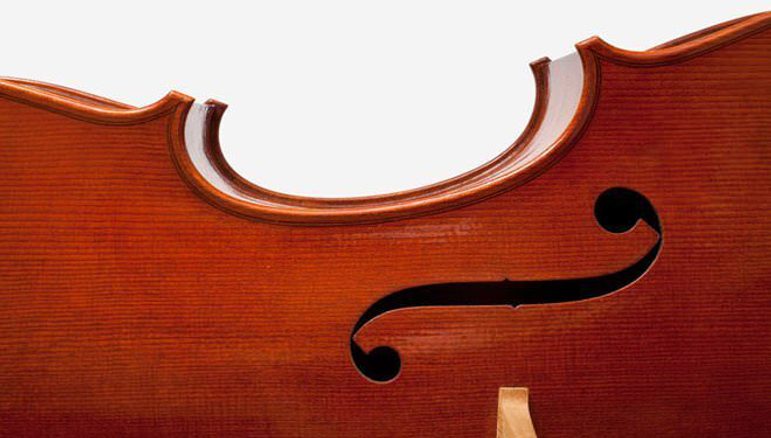
All players are influenced to a greater or lesser degree by an instrument's appearance, and an old or antiqued instrument with a nice wear pattern certainly has more to hold the eye. However, in any given period instruments are made in varying quality and older is not necessarily better. Most instruments improve with regular playing and the more consistent the playing, the more they will improve. The Calleva Foundation hopes to demonstrate over time that these fine new instruments can compete with many older instruments and that with good playing and due care, they will improve further still.
The Calleva Collection instruments are on loan to the Royal Academy of Music for use by Academy students, giving tomorrow's musicians a better understanding and appreciation of contemporary instruments. The bows offer the students the chance to experiment and explore how their playing might be developed further with different bows.
A selection of pictures of the new instruments commissioned for the Royal Academy of Music from some of today’s finest luthiers
Rutson Collection
The Royal Academy of Music’s famous strings collection consists of nearly three hundred instruments, the majority of which were received as gifts over the last century. In 1890 John Rutson (1829-1906), an amateur musician who became a director of the Royal Academy of Music, gave an important group of stringed instruments to the institution. The collection began in 1906 with the receipt of his bequest. This included two violins, 1694 Rutson and 1718 Maurin, and the magnificent 1696 Archinto viola all by Antonio Stradivari. Among other fine instruments in the Rutson Collection are three important examples by members of the Amati family, including a rare tenor viola.
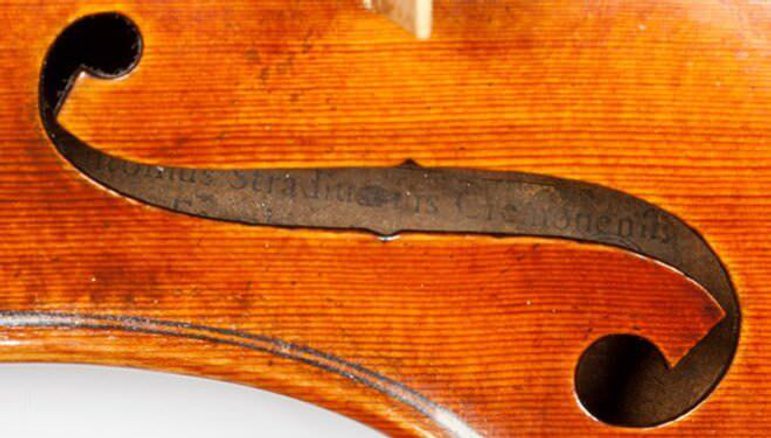
Various important and interesting instruments, including from the Rutson Collection, are displayed in the Academy Museum’s Strings Gallery. Many Academy collection instruments are also lent to young Academy musicians during their studentship. The collection as a whole represents a wide cross-section of instruments, including examples from the Italian, French, German and Dutch schools of making, as well as a broad sample of fine British work.
Spencer Collection
The Spencer Collection’s rare and interesting material dates from the mid-16th century. It contains lutes and guitars, printed books and manuscripts for the lute and guitar, song sheets, an instruction sheet for fretting, and pages from the Mynshall, Burwell and Margaret Board lute tutor books. The Spencer Collections holds concert notices and advertisements, and playbills. It has strong visual material, such as engravings, mezzotints and lithographs relating to the guitar, lute, musical patronage, performers, performance venues, patrons, composers (particularly in relation to the lute and guitar), and allegorical scenes (such as representing the Five Senses or the Seasons), effigies and tombs, portraits of British kings, queens and aristocrats, and musical scenes. The Spencer collection also has exhibition panels relating to the life of Henry Purcell used for the tercentenary of the composer’s death in 1995 in an exhibition curated by Robert Spencer in the Wigmore Hall.
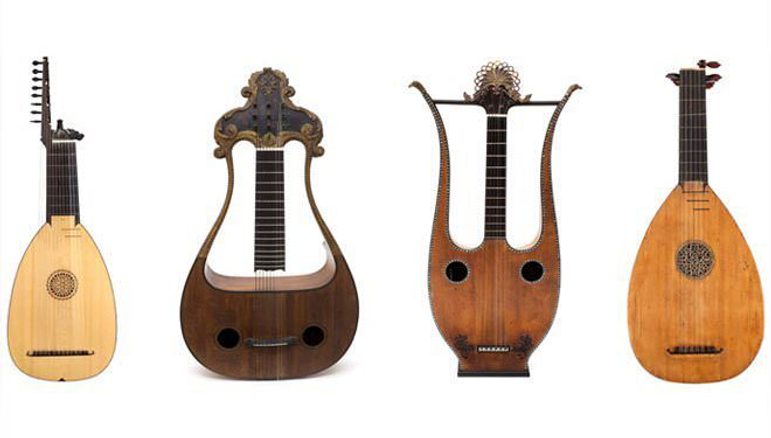
The collection’s creator, Robert Spencer HonRAM (1932-1997) was connected with the lute as a performer, scholar, teacher and collector of instruments and of manuscripts. He was professor of early English song at the Academy for nearly 25 years. Robert Spencer used his collection as a working library, enabling him to carry out the detailed scholarly research which underpinned his performing and teaching activities.
Various instruments, manuscripts and prints from the Spencer Collection are on public display in the Museum’s Strings Gallery. The Spencer Collection was acquired by the Academy in 1998 with the help of the National Heritage Memorial Fund, Mrs Jill Spencer, the Britten-Pears Foundation and contributors to a public Appeal.
Performers
Explore larger named collections relating to various historical performers who have studied or visited the Academy
Ethel Bartlett and Rae Robertson Collection
The collection at the Academy includes personal photographs, some press cuttings and letters relating to this eminent piano duo.
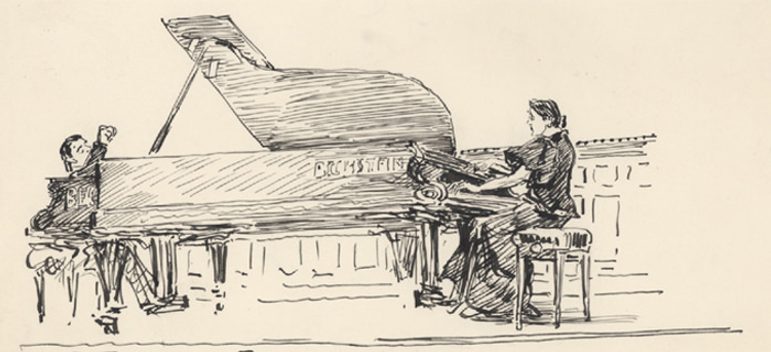
Ethel Bartlett (1896-1978) and Rae Robertson (1893-1956) were a very successful piano duo. They were both students at the Royal Academy of Music and enjoyed an extensive international career, in particular in the USA. They commissioned and recorded many of new works for piano duo from composers including Bohuslav Martinu and Benjamin Britten. Bartlett, a student of Tobias Matthay and Artur Schnabel, also partnered John Barbirolli in his early career.
James Blades Collection
James Blades OBE was a largely self-taught musician who played all styles of music; he taught percussion at the Royal Academy of Music for many years.
Blades provided the sound, but not the image, of the Rank Organisation's 'Gongman', who introduced films for many years. He also provided the rhythm of the Morse code for 'V', which the BBC used as a call sign during the Second World War.
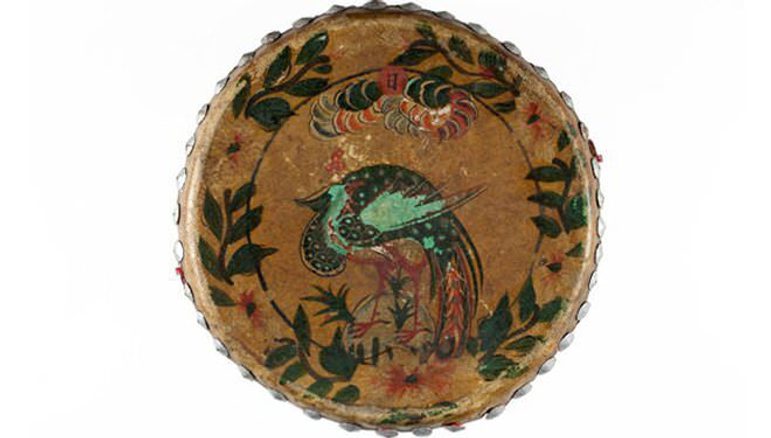
Blades worked closely with Benjamin Britten to produce the precise sounds that were needed in many of his compositions, researching percussion instruments from many musical traditions, constructing his own instruments and experimenting with the sounds produced by unusual items. Many of these instruments form part of the Academy’s museum collections.
Jenny Lind Archive
This archive comprises material concerning the life of the Swedish soprano Jenny Lind (1820-1887), collected with a biographical purpose by her husband Otto Goldschmidt (formerly Professor of Piano and Vice Principal of the Royal Academy of Music).
After Lind's death, in 1887, Goldschmidt engaged two writers: Canon Henry Scott Holland (with Goldschmidt, a young piano pupil of Felix Mendelssohn) and William Smith Rockstro. John Murray published Jenny Lind, the Artist in 1891. The two-volume biography treated Lind’s life to 1850, when she retired from the operatic stage.
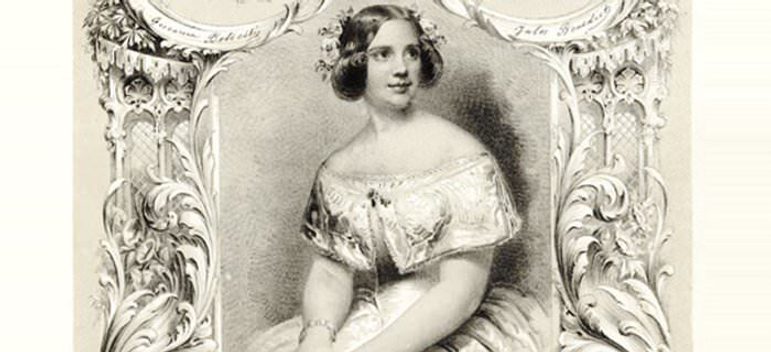
Access to Archives provides a fully-searchable database of the Jenny Lind catalogue. To access the Lind catalogues through Access to Archives, follow the link, select ‘Search the Database’ and enter ‘Jenny Lind’ in the standard search box. The Academy’s catalogue appears first in the results list, and can be viewed in full, or by ‘table of contents’ summary.
Tobias Matthay Collection
Tobias Matthay won the Sterndale Bennett Scholarship to the Royal Academy of Music in 1871. He was appointed a sub-professor at the Academy from 1876, and was a full professor from 1880 to 1925. His made his debut as a pianist in November 1884.
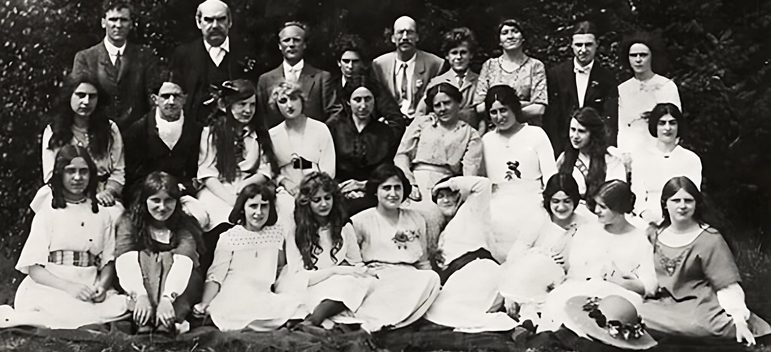
Matthay taught many of Britain’s finest pianists, including Dame Myra Hess, Harriet Cohen, Irene Scharrer, Clifford Curzon, Dame Moura Lympany, York Bowen, Harold Craxton, Vivian Langrish, Eileen Joyce, Irene Scharrer, Nina Milkina and Eunice Norton. In 1905 he opened the Tobias Matthay Piano School while continuing at the Academy. He is the author of many educational works for piano technique.
The collection includes portraits and some small personal items, as well as his Bechstein composing piano and some fingering charts. In addition, the Special Collections within the Library hold a collection of his manuscripts and other items more recently acquired, along with samples of his wooden practice triangles and their accompanying instruction charts.
McCann Collection
Norman McCann studied singing at the Royal Academy of Music from 1948 to 1952. His personal collection was bequeathed in 1999. It comprises an extensive archive of photographic materials, ephemera, historic theatre playbills, recordings, memorabilia, scores and books.
This collection is particularly strong in autographed images of historic singers, instrumental performers, conductors and composers. It also contains an extensive and important archive of letters, musical quotations, contracts, miscellaneous documents, dedicatory poems, historic printed sheet music and some scores, and other items from or relating to composers and performers. Many items have been contributed directly from the personal collections of British and European musicians. Also included are more generic postcards with musical subjects, including images from antiquity, of humour, world music and other spheres, and a large collection of London theatre playbills.
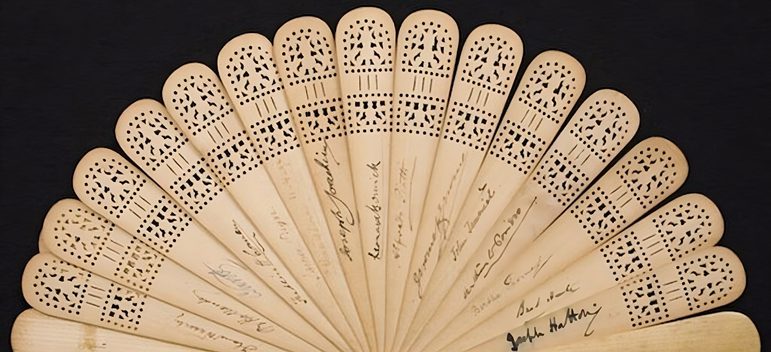
McCann Concert Programme Archive
The McCann concert programme archive is particularly extensive and comprises opera and ballet programmes c 1830-1996; many chamber music programmes from the 1830s-1997; a separate document comprising an assessment of British concert programmes to 1955; and foreign concert programmes.
A separate concert programme archive is held in the Library’s Special Collections. Contact the Library for more information.
Foyle Menuhin Archive
The Foyle Menuhin Archive covers the life, career and personal interests of the famous violinist Yehudi Menuhin, Lord Menuhin of Stoke d’Abernon, Hon RAM (1916-99). The archive was acquired by the Academy in March 2004, with generous funding from the Foyle Foundation and other donors. The archive consists of books, printed music, manuscripts, photographs, programmes, correspondence, objets d’art, drawings, paintings, memorabilia, scrapbooks and newspaper clippings.
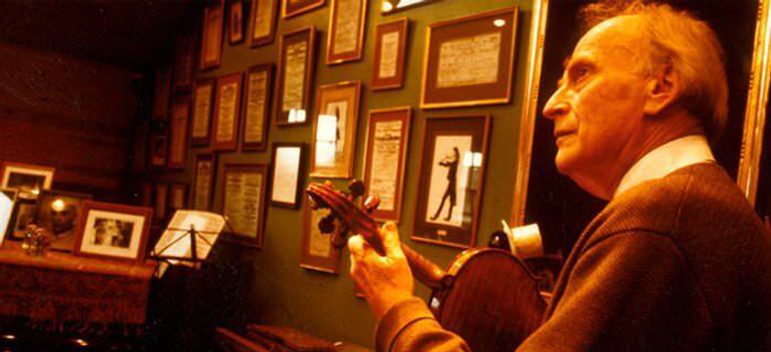
The artworks and objets d’art include portraits, prints and original newspaper reports relating to the violinist Nicolò Paganini; many personal photographs of Yehudi Menuhin and other musicians; and playbills, posters, certificates and citations, medals, sculpture and other commemorative items.
Access to music and books is available available via the Library catalogue.
Access to the archival material is available on application to the Library.
David Munrow Archive
A performance-centred archive, largely comprising files of music that relate to concerts given by the Early Music Consort of London (founded and directed by David Munrow) and to their audio recordings.
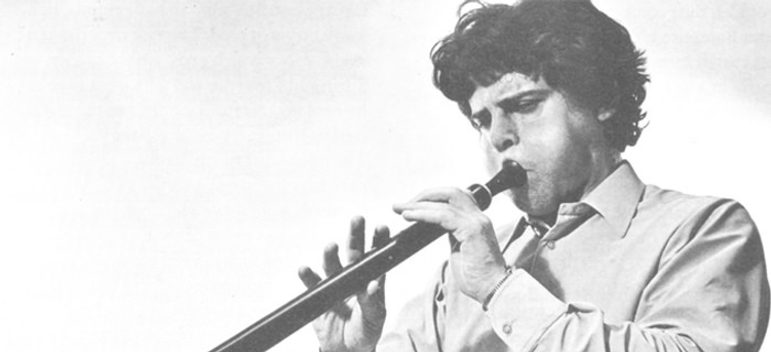
The archive also contains Munrow's scores and arrangements for television and film productions, as well as some radio scripts. Material relating to the 1976 publication Instruments of the Middle Ages and Renaissance, and some correspondence, is also included.
The catalogue for this collection can be found in The National Archives.
Percussion instruments donated by the late Christopher Hogwood CBE Hon RAM and used by the Consort are catalogued in the Museum collections database.
Spencer Collection
The Spencer Collection’s rare and interesting material dates from the mid-16th century. It contains lutes and guitars, printed books and manuscripts for the lute and guitar, song sheets, an instruction sheet for fretting, pages from the Mynshall, Burwell and Margaret Board lute tutor books, concert notices and advertisements, and playbills. It has strong visual material, such as engravings, mezzotints and lithographs relating to the guitar, lute, musical patronage, performers, performance venues, patrons, composers (particularly in relation to the lute and guitar), and allegorical scenes (such as representing the Five Senses or the Seasons), effigies and tombs, portraits of British kings, queens and aristocrats, and musical scenes. It also has exhibition panels relating to the life of Henry Purcell, used for the tercentenary of the composer’s death in 1995 in an exhibition curated by Robert Spencer at Wigmore Hall.
The Spencer Collection’s creator, Robert Spencer Hon RAM (1932-1997), was connected with the lute as a performer, scholar, teacher and collector of instruments and of manuscripts. He was professor of early English song at the Academy for nearly 25 years. Spencer used his collection as a working library, enabling him to carry out the detailed scholarly research that underpinned his performing and teaching activities.
Various instruments, manuscripts and prints from the Spencer Collection are on public display in the Museum’s Strings Gallery. The Spencer Collection was acquired by the Academy in 1998 with the help of the National Heritage Memorial Fund, Mrs Jill Spencer, the Britten-Pears Foundation and contributors to a public appeal.