Alumni Spotlight: Claudia Fuller
News Story
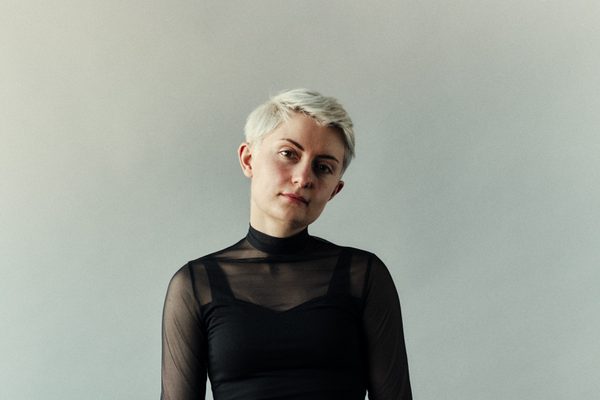
Claudia Fuller (BMus 2016 and MA 2017, Violin) has performed with WDR-Sinfonieorchester, the Philharmonia and BBC Symphony Orchestra, amongst others.
Claudia completed further study in Conducting at the University of the Arts, Berlin and has since conducted the International Contemporary Ensemble, Brandenburger Symphoniker, Hradec Králové Filharmonie and the Orquesta Filarmónica de Gran Canaria. In spring 2025, Claudia was Assistant Conductor of the Royal Ballet and Opera’s new production of Telemann’s comic opera Pimpinone as part of the Jette Parker Young Artist Programme.
What is your earliest musical memory?
I have a terrible memory, but I remember having a bright red plastic toy violin when I was really little. It had a friction band stretched between the fingerboard and the bridge, and when you pressed the bow against it, it would play a note. If you played in the right rhythm, it would churn out a nursery rhyme. I searched for it recently because the memory suddenly resurfaced and I found a video of the exact toy on YouTube. It sounds absolutely awful; this high pitched, whiny noise. I can’t believe I loved it so much. I feel a bit sorry for my parents; I must have played it constantly. Still, it was a very cool little thing to have as a child, and it’s one of the few early musical memories that has really stuck with me.
You began your career as a violinist, and you've recently moved into conducting. In what ways does your experience as a violinist shape your artistic voice now that you're on the podium?
I still play professionally and I’m in the early stages of my conducting career, so I hope to keep doing both because of the insights and influences that each has on the other. Having spent a decade playing in orchestras I draw on that experience constantly when I’m on the podium. It helps me to imagine sound quality and tempo and to understand what is actually feasible to ask of musicians, especially string players. Being an orchestral player has also shaped how I think about the human side of conducting. Talking with colleagues over the years gave me a clear sense of what builds trust and rapport with an ensemble. There can be a tendency to put conductors on a pedestal, but the reality is simple: a conductor doesn’t make sound, the orchestra does. While musical ideas and skill are essential, I think it’s just as important for a conductor to create a sense of community when we work. This perspective has helped me build relationships with the orchestras I’ve worked with.
Can you tell us more about the day‑to‑day life of conducting?
There’s little routine to it. As someone who has ADHD, that’s something I love about the job – every day is different – but I also find it quite hard, because the structure of the day has to come from you, not from external sources. If I’m not actively rehearsing for a project, I’m usually learning scores at the piano or researching the cultural and political context of the pieces I’m working on. After 27 years playing the violin, I can more easily judge whether I’m playing something well enough, or whether I’ve reached the standard I expect of myself. With a score, it feels like there is always more I could discover, always more I could read. It can be tough to step away from that. But for me, music is about communicating our experiences as human beings and you need to have those experiences and treat yourself well. I try to go to the gym, take a walk or stay connected to the world outside work. Every day is different, and that’s both exciting and a bit terrifying.
For me, music is about communicating our experiences as human beings and you need to have those experiences and treat yourself well.
How did your Academy training help you to prepare for your career?
Training at the Academy meant working with some of the top musical talents as professors, and that was always challenging in the best way. It pushed me not only to be as technically prepared as possible for classes, but also to bring my most nuanced and thought‑out musical ideas from day one, whether in chamber music, orchestral playing or solo repertoire. The Academy prepared me by instilling a value I still hold now: treating every project and every opportunity with equal respect and dedication and giving the best I can in every job. No matter what kind of work you’re doing, whether you’re a full‑time orchestral musician, freelancing or a chamber musician, you need that drive to come from within yourself.
The Academy prepared me by instilling a value I still hold now: treating every project and every opportunity with equal respect and dedication and giving the best I can in every job.
Do you have any favourite memories from your time at the Academy?
It’s not one specific memory, but I played in a string quartet from my very first term onwards. All the string players were put into chamber groups and you were meant to play together for a few months. I ended up playing with that group, the Halcyon Quartet, for six years. They’re still going and still giving fantastic concerts across the UK. I loved every concert and every class we had together. It felt like a little family within the wider Academy.
I also remember playing Elgar 1 with Ed Gardner in my first term. Someone had dropped out, which meant two of us in our first year were asked to join. I sat at the back of the first violins, and there’s that moment where only the back desks of the strings have the tune while all the other instruments are going wild. I just remember sitting there thinking ‘I can’t believe I’m doing this. This is crazy’. As much as I have fond memories of the teaching and the learning, I also miss sitting in the canteen with everyone, having conversations, sharing stories. It really is a community of its own.
I realised my pursuit of multiple artistic and professional endeavours made me no less dedicated or less of a serious musician.
What advice do you have for anybody looking to follow a similar career path to you?
I was often told growing up that being a ‘Jack of all trades, master of none’ was a negative thing, only to learn recently that the full phrase ends: ‘…is often better than a master of one.’ Learning this sentiment was wrong all along changed a lot for me; I realised my pursuit of multiple artistic and professional endeavours made me no less dedicated or less of a serious musician. Of course, hard work and dedication matters, but the artists who inspire me most are the ones who follow their curiosity. So my advice is: let yourself explore. Being interested in many things can be one of your greatest strengths.
I don’t want to lose perspective on why we make music at all which, I think, is to connect with people.
What’s next for you?
I’m preparing for the semi‑finals of the Siemens Hallé Conductors Competition, which is very exciting. After that, I hope to continue building my work as a conductor while still playing the violin in different contexts. I also want to get to know Berlin better, where I’m now partly based. I moved here to study and, honestly, I’ve barely seen the city. I’d like to spend more time with friends and keep a life outside of work, because you have to bring something of yourself to the music, which doesn’t happen if you’re not experiencing the real world. With ADHD, time management can feel like a work‑in‑progress, but I’ve learned that a lot of people feel the same, whatever their profession. It helps to remember we’re all just trying to do our best in our work, in our relationships and in our lives outside music. Ultimately, I don’t want to lose perspective on why we make music at all which, I think, is to connect with people.